As the US-Iran memorandum of understanding took effect, the Strait of Hormuz entered a reopening phase on Thursday, with stranded tankers gradually activating their AIS signals and transiting the strait. Vice President Vance stated that more than 12 million barrels of crude oil had passed through “overnight.”
However, mines remain in the middle of the waterway, and shipowner confidence has not yet recovered. After the trapped tankers leave, it remains uncertain whether shipowners will be willing to send empty vessels back to the Gulf for loading.
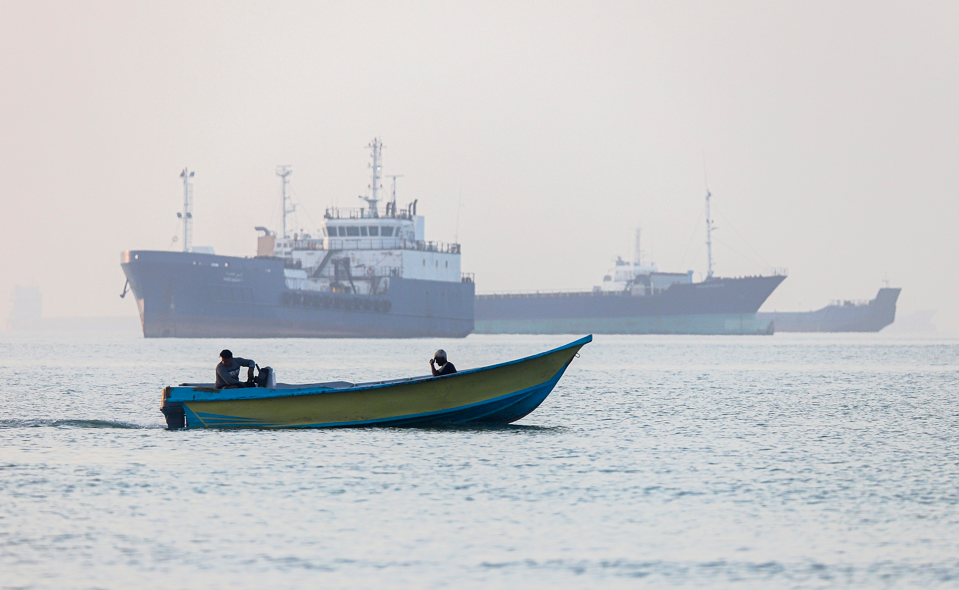
June 19 — As the memorandum of understanding signed by the United States and Iran officially came into force, the Middle East’s key oil shipping route, the Strait of Hormuz, entered a state of reopening in calm conditions on Thursday.
Of course, the passage of a few tankers does not mean that navigation has returned to normal. Before the war, more than a hundred vessels crossed the Strait of Hormuz every day, including dozens of oil tankers. As fully laden fuel carriers that had waited for months begin to leave the strait, it remains uncertain whether shipowners are willing to send empty vessels back into the Persian Gulf. Kpler, a shipping data intelligence company, said on Thursday that no significant increase in transit volumes has been observed so far. Kpler estimates that once the shipping industry gains confidence in a U.S.-Iran deal, 118 tankers trapped in the Persian Gulf could sail out through the Strait of Hormuz within 15 days. Kpler also forecasts that within 30 days after a deal is reached, about 12 tankers per day could enter the gulf to load oil, still far below pre-war levels. Kuwait Announces Oil Production Increase Sheikh Nawaf Al-Sabah, CEO of Kuwait Petroleum Corporation, announced on Thursday that the country has completed sufficient repairs to its damaged energy infrastructure to rapidly restore production capacity in the context of a U.S.-Iran agreement. He also said that all force majeure notices issued during the war due to the inability to fulfill supply obligations would be “immediately lifted.” Kuwait reportedly plans to raise daily production to 2 million barrels within a week, and expects to restore pre-war output within weeks as commercial vessels return to Kuwait. Before the war broke out this year, Kuwait’s oil production capacity stood at just over 2.5 million barrels per day. After the closure of the Strait of Hormuz caused storage tanks to fill up, output fell to as low as 500,000 barrels per day.